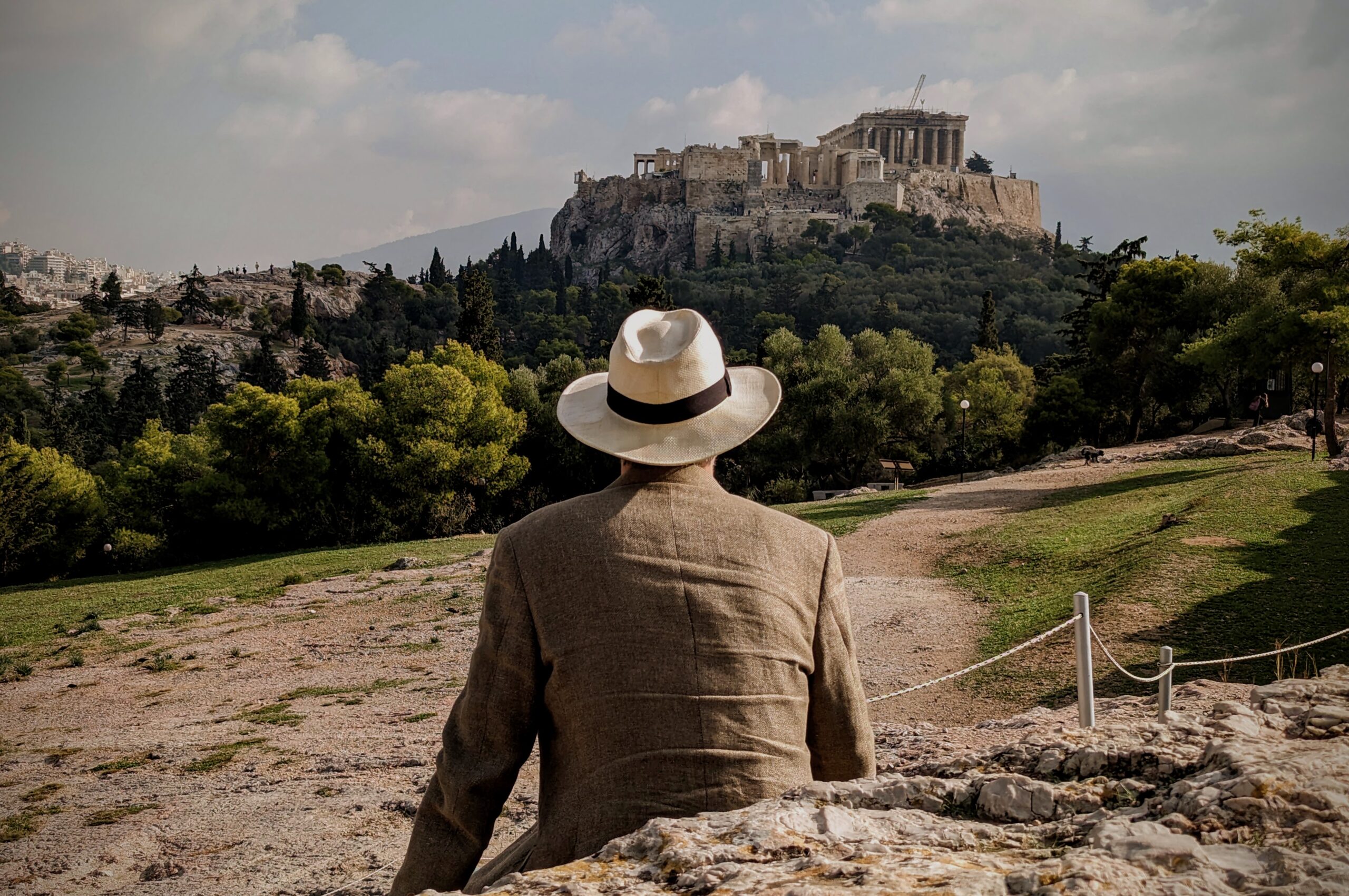
Mark Twain ends The Innocents Abroad with one of the better arguments for leaving home:
“Travel is fatal to prejudice, bigotry and narrow-mindedness, and many of our people need it sorely on these accounts. Broad, wholesome, charitable views of men and things can not be acquired by vegetating in one little corner of the earth all one’s lifetime.”
He was describing a promise, not issuing a guarantee. It remains entirely possible to cross three continents without letting a foreign idea past one’s own defenses—to visit the great capitals, eat at familiar chains, complain that no one speaks English properly, and come home with every prejudice carefully reinforced. Airports are full of people who have traveled enormous distances in order to remain exactly where they began.
Done well, though, travel loosens certainty. It shows that the ordinary business of living—when one eats, how one greets a stranger, what a street is for—has been settled differently elsewhere, and no less thoughtfully. It also supplies beauty, pleasure, historical perspective, memorable meals, and the restorative discovery that our daily difficulties do not occupy the center of the known world.
Elsewhere will concern itself with how to choose destinations, how to get there, where to stay, and what to do once arrived. Over time it may accumulate brief guides to particular cities and regions, and occasional attempts to explain why one place lodges in the mind while another survives chiefly as a folder of forgotten photographs. The object of travel must always be the place itself and what it has made of itself—its art, its food, its history, its habits.
Choosing Where to Go
There are travelers who keep a list of places everyone is expected to see, and travelers who reject every famous place on the grounds that other people have heard of it. Both have let the crowd decide.
A place does not become unworthy because it is famous. Athens, Paris, Rome, Kyoto, and Florence have all survived considerable popularity; the Parthenon is not diminished by appearing on a postcard. Be suspicious of any sophistication that requires the deliberate avoidance of great things. But reputation alone is a poor itinerary, and the reason to go anywhere is that something is there—something fixed to that ground and available nowhere else.
This is the peculiar power of travel over every other way of learning about the world. One can read Thucydides anywhere. One cannot stand on the Pnyx anywhere: a modest hill, unremarkable until you understand that men climbed it to argue an empire into existence and then to argue it away again. The distance from there to the Acropolis is a short walk, and walking it tells you something about Athenian democracy that no map conveys—that the assembly and the gods were within sight of each other, and both were within sight of the sea that made the whole thing possible. That is not available in a book.
So the question is not whether a destination is celebrated or overlooked but what it holds that is fixed in place. The famous city offers density, and with it queues, inflated prices, and districts converted into a performance of local life. The smaller one may offer a single extraordinary thing and the time to sit with it. Neither condition is a credential: the man who announces that Tuscany is “over” and that the true Italy is now reachable only by mule has become dependent on the very hierarchy he pretends to disdain. Two questions settle it. What can be encountered there that cannot be encountered quite the same way elsewhere, and will you care when you encounter it?
Before You Leave
Spontaneity works best when it has been supported by research. Learn enough to recognize what you are looking at—read a history, a novel, a few serious articles, or at minimum a guidebook whose author’s chief qualification is not that he once spent forty-eight hours there.1 Understand the geography. Know the major periods, the customs that matter, the foods worth seeking, and the institutions requiring reservations weeks in advance. This does not rob travel of discovery; it makes discovery possible. Without context, one church becomes another church and one ruin just another arrangement of stones. Knowledge is what allows the details to reveal themselves as part of a grander story.
Preparation should stop short of total advance knowledge, however. The traveler who has inspected every menu, watched every walking tour, and scheduled each hour arrives only to confirm what the internet already told him. The best itineraries have a few fixed points and enough air between them for weather, fatigue, appetite, and accident. Reserve the difficult table, buy the museum ticket, know when the last train leaves—then let an afternoon develop unplanned. A city is difficult to love while being marched through according to a spreadsheet.
Then pack, which is mostly an application of principles set out in the Wardrobe. Take one bag you can carry yourself and less in it than you think you should; laundry exists in other countries, as do pharmacies and men willing to sell an umbrella the moment it rains. Bring clothes that repeat without looking accidental, and wear proper shoes, broken in before departure. The most beautiful city in the world becomes theoretical when one’s feet have resigned.
Getting There
Getting there is part of the journey, and the airlines are well aware of it—hence the elaborate advertising of the upgrade, the lounge, and the boarding group, all sold as though the flight were itself a destination. It is not. But comfort is a legitimate consideration: a long flight in a flat bed is better than the same flight with one’s knees against the seat ahead, a quiet train compartment beats standing beside the lavatory, and a good car suited to the road improves a long drive. Where the means exist, spend some of them on arriving rested—premium cabins are especially defensible on an overnight flight, where a few hours of real sleep preserve the first day of the trip from exhaustion and resentment.
There is no moral distinction, however, between the passenger in front of the curtain and the one behind it. Some can afford more room, some have accumulated miles, some are traveling on the company, and some have sensibly concluded that the fare difference would buy a week of good dinners after landing. All may be right. The vulgarity lies in treating comfort as rank—and in narrating how the comfort was obtained, a subject on which these pages have already ruled.2 Comfort should increase one’s capacity to notice; otherwise it is only upholstery.3 Travel well and make the journey easier for others while you are at it: board when called, keep the aisle clear, decline to repack a household beneath the overhead bins, use headphones, and recline with some awareness of the person behind you.
On the road, choose the route as carefully as the vehicle. Sometimes the interstate is merely a means of escape and sometimes the slower road is the entire point. Pull over for the view, the old town, the regional lunch, or the historical marker whose text has plainly been waiting years for someone to stop and read it.
Where to Stay
A great hotel is one of travel’s principal pleasures—good rooms, a proper bed, thoughtful service, a handsome bar, and staff who actually know the city. A suite gives room to settle, read, dress, and put a child to bed without requiring everyone else to join him, and I am firmly in favor of suites, as I am of several other things costing more than their strictly necessary equivalents. The better hotels justify themselves through space, quiet, location, and the removal of small frictions before they accumulate.4
A great hotel is also beyond the means of many travelers, and no matter—whatever tier one lands in, insist on the fundamentals. A good bed, cleanliness, quiet enough to sleep, sound walls and a door that locks, plumbing that works, and a location suited to the trip. Character matters nearly as much. This does not mean decorative cliché, the sort of room that announces its city through a mural of whatever site the tourist board has settled on; it means some sense of being there rather than inside a transferable corporate chamber parked above a convention center. Look for local architecture, history, materials, or a long-established relationship between the hotel and its street. The grand old hotel, the thoughtful small inn, and the well-run modern property that understands where it was built can all manage it.5
Finally, talk to the people who work there. Staff are among the best sources of local judgment, provided the question is asked properly: “what is the best restaurant” produces the answer safest for the hotel to give, while explaining what you actually want—a quiet dinner, a regional dish, a serious cocktail, an afternoon beyond the standard sights—produces something useful. The concierge may hold the difficult reservation, but the porter or the bartender often knows where dinner is genuinely good. Weigh the recommendations rather than worshipping them; some are excellent and others have been arranged by a long-standing commercial understanding or a cousin who has recently opened a seafood restaurant.
Once You Are There
A destination is not a backdrop for the traveler. Walk it. Take the tram. Sit in a café without requiring the hour to become productive. Visit the central museum and the minor one devoted to a subject no committee would now approve as sufficiently marketable. See the markets, parks, religious buildings, old neighborhoods and new districts, and the landscape that shaped the place—and look beyond the polished center, since the real life of the city usually begins two streets after the souvenir shops end.6
Learn a few words of the language; they may be badly pronounced, and the effort will still be received more warmly than the assumption that everyone else should conduct the encounter in English. Observe local manners—customs around dress, volume, punctuality, tipping, queuing, and personal space all vary, and the fact that another custom inconveniences an American does not make it irrational. There will be frustrations. Trains fail, museums close, weather intervenes, and some celebrated attraction proves less moving than the modest thing encountered on the way back. This is part of travel’s corrective function: the world has not been built around the itinerary.
Eat as the place eats. Seek the dishes and ingredients that belong to the region, visit the market, and drink the local wine or beer where it is made and where people understand it without performance. Not every meal must be pedagogical—one may eventually want an omelet—but a trip spent eating exactly as one eats at home has declined one of its principal opportunities. Fine dining belongs here too, since a great restaurant can concentrate a region’s agriculture, technique, and ambition into a few hours; though be on guard against those restaurants that produce globally transferable luxury, which is to say expensive ingredients, excellent tweezers, and a meal that could have happened in any city with wealthy visitors. Both may be a pleasure. Only one tells you where you are.
Travel Is Not an Achievement
The language of travel has acquired an unfortunate resemblance to conquest. Countries are “done,” cities are “checked off,” continents are counted, and a long weekend becomes proof of having known a civilization. A place is not completed because one has stood in front of its most famous building.
Stay longer when possible, and return. Repetition reveals what novelty conceals: the second visit is usually better than the first, because the obligation to see everything has weakened and ordinary preference can begin—one goes back to the same neighborhood, orders without consulting six reviews, and learns that the hotel bar is better on a Tuesday. Nor must every journey be transformative. The demand that travel alter one’s life places an unreasonable burden on four days in Seville; sometimes the sea is beautiful, dinner is excellent, the bed is good, and one comes home restored rather than reborn. That is enough. The person who insists every trip was life-changing may simply have led an unusually unstable life.
Bring something home, and let it be a continuation rather than a trophy: a bottle to open later, a book unavailable in one’s town, a bowl, a textile, a record, a recipe, some modest object whose presence recalls a particular street. Buy things connected to the place that can also fit into your actual life—a ceremonial implement of enormous size may be perfectly authentic and still prove difficult beside the toaster. The more lasting acquisitions are less visible anyway: a dish learned, an author discovered, a historical episode pursued after returning, a standard raised because somewhere else demonstrated the thing could be done better. Travel ought to unsettle the arrangements at home from time to time. Perhaps dinner moves later, or the wine improves, or a room is reconsidered. Otherwise one has merely transported the self abroad and brought it back unexamined.
What Elsewhere Will Cover
Elsewhere will range across the choosing of destinations, air and road and rail travel, hotels, museums, restaurants, regional food and drink, manners abroad, itineraries, and the practical work of seeing a place without reducing it to sights. There will be dispatches on particular cities, hotels worth the stay, restaurants worth planning a trip around,7 museums requiring more time than the guide allows, and destinations whose appeal rests on one landscape, one history, or one magnificent and unreasonable obsession.
These pages will favor comfort, luxury that improves the journey, hotels with character, itineraries with breathing room, famous places that deserve their fame, and obscure ones that deserve discovery. They will have less time for the country counter, the guest who berates staff, the hotel room requiring an app to operate the lamp, and the traveler who has crossed the world only to complain that breakfast is not conducted as it is in Ohio.
The world is large. This is not an inconvenience; it is the point.
Notes
- The dispatches these pages will eventually publish on particular cities are, of course, exempt from this stricture, having been produced under conditions of considerably greater rigor—which is to say by someone who stayed at least three days and ate rather more than was strictly advisable. ↩
- See the opening dispatch of these pages. The man who flies first class and says nothing is at ease; the man who explains the points scheme by which he arranged it has told you something he did not mean to. ↩
- Which brings us, unavoidably, to the cruise—an arrangement in which the comfort of the vehicle has led to the vehicle itself promoted as destination and the destinations demoted to amenities. The ship is the point: its restaurants, its pools, its theaters, its inexhaustible buffet. The ports exist to service the ship, and increasingly to be serviced by it, since a town visited by four thousand people for six hours at a time will eventually reorganize itself around selling them something in the interval. One disembarks into a district built for disembarking, purchases a memento of a place one has not seen, and returns aboard for dinner at the appointed hour. It is a way of going nowhere at considerable expense. ↩
- Others of supposedly equal standing justify themselves chiefly through marble, lobby fragrance, and a solemn young man explaining the lighting controls. These should be avoided. Luxury should be felt in the quality of the stay: a touchscreen required to close the curtains is evidence that engineering has defeated hospitality. ↩
- A word on the alternative—Airbnb and short-term rentals. I prefer hotels, and not only because one may check in and expect the sheets to have been changed without first consulting a binder on the owner’s philosophy of laundry. In cities where homes are already scarce, converting them into a rotating supply of visitor accommodation costs the people trying to live there: the traveler gets a temporary neighborhood, and the neighborhood gets another keypad and one fewer neighbor. In rural areas and places where hotels are scarce, the rental still earns its place. Elsewhere it is simply the less honest transaction—you have come as a visitor, and no one is pretending otherwise when the key is at a front desk. ↩
- Though without treating residential neighborhoods as anthropological exhibits. You are a guest in a functioning society, not an inspector sent to determine whether the locals have arranged themselves authentically enough. ↩
- The practice has a distinguished commercial origin. The Michelin brothers began their guide in 1900 to give French motorists reasons to drive—and, not incidentally, to wear out their tires. The stars arrived decades later, and the highest of them still means a restaurant worth a special journey. One of the more successful marketing schemes in history, and one of the few that improved the thing it was selling. ↩