There are many guides to living cheaply, efficiently, productively, sustainably, or with the serene confidence of a man who owns six identical black T-shirts.
This site is not such a guide.
Instead, the Snoot offers a guide to living well: to good food, good clothes, good rooms, good books, good travels, and the thousands of small choices that separate a life merely slept through from one properly considered.
There is a difference between what is genuinely good and what has merely been marketed, priced, photographed, and aggressively described as such. Sometimes that difference is obvious. More often it is not, and I mean to say which is which.
A well-cut jacket in wool or linen is good. A plastic garment engineered to survive both a marathon and an office happy hour, and suited to neither, is not. A neighborhood bistro with twelve tables serving one magnificent dish is good. An ambitious restaurant operating at the highest level can also be good, but one designed chiefly to be photographed, franchised, or admired by people who have mistaken visibility or a high price for actual quality is not.
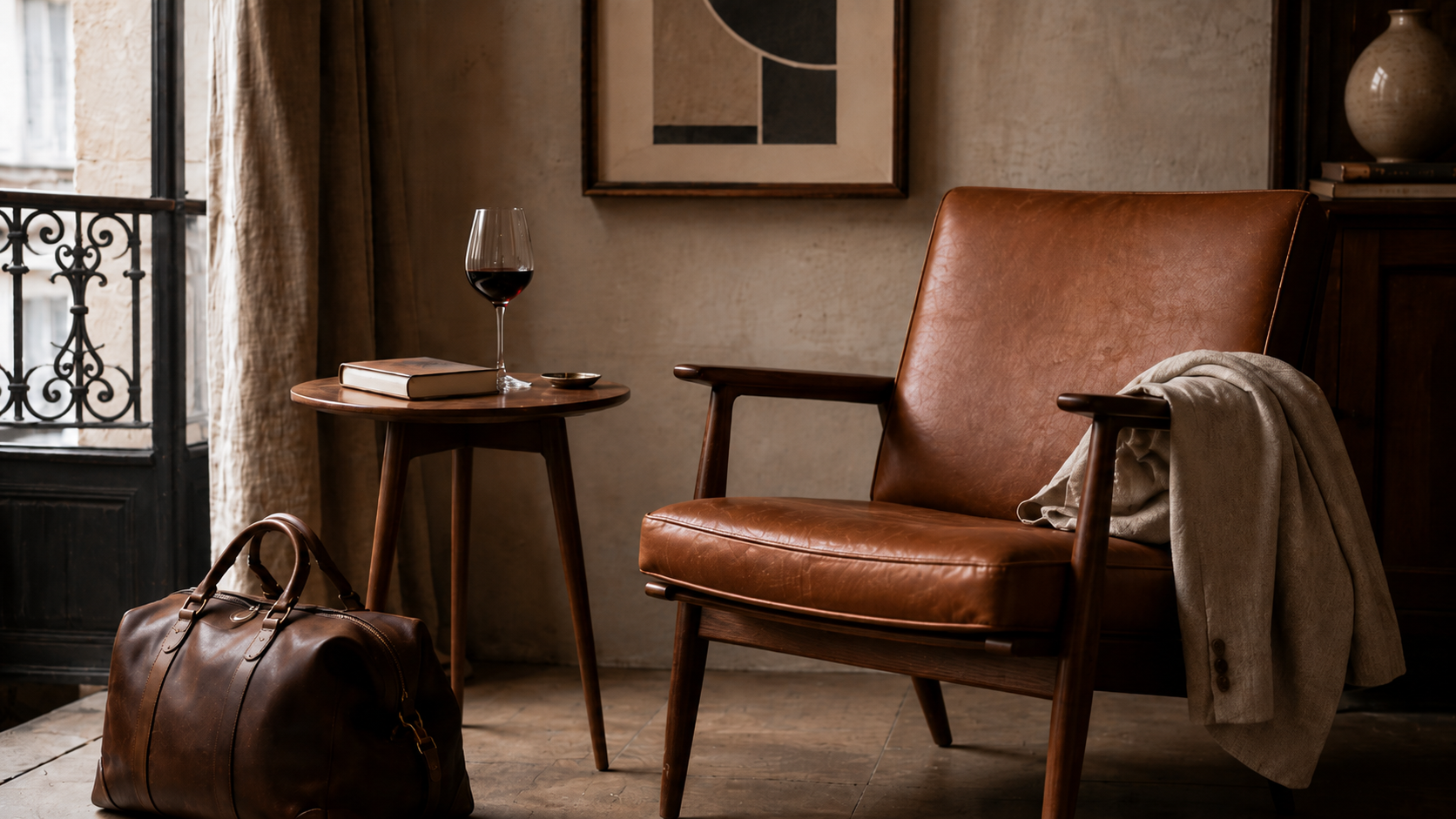
Honestly made solid wood furniture is good, be it new, old, refined, rustic, inherited, or retrieved from a curb beneath a handwritten sign reading FREE. Particle board disguised as timber is bad. Particle board disguised as luxury is worse.
Which brings us to a thing worth saying plainly.
Taste is not everything. A man may wear an atrocious shirt and possess a beautiful soul; a woman may wear an impeccably tailored silk dress and be intolerable company. Taste does not redeem conduct, and I would never claim otherwise.
But taste, properly understood, is mostly a matter of honesty, and honesty is not far from a virtue. A thing that is plainly what it is will always sit better than a thing pretending to be what it is not. The solid chair is better than the one wrapped in a thin wood-grained veneer, not only because it will last longer, but because it is not pretending. The same instinct applies to people, since what needs announcing is usually what is least secure. The man who flies first class and says nothing is at ease. The man who mentions it—and mentions, too, what the ticket cost, or the elaborate scheme of miles and points by which he arranged it—has told you something he did not mean to. The explanation is the tell. Ease, in the end, is the whole of it: the quiet confidence of a person who is exactly what they appear to be, in any room, requiring no explanation.
The Snoot is divided into five parts. The Wardrobe concerns dress. The Study concerns culture, reading, and the life of the mind. At Home concerns the domestic world: rooms, objects, the table, hospitality. About Town concerns conduct among others: neighbors, restaurants, work, and what one owes the public world. Elsewhere concerns travel. Across all five, I will praise what deserves praise and condemn what deserves condemnation, and I will try, each time, to explain the difference, because an opinion that cannot explain itself is merely a prejudice in good tailoring.
I will occasionally be wrong. Taste is not mathematics—though a great many people with bad taste would improve considerably by treating it with more rigor. When I am wrong, I will say so, eventually, and with tremendous grace.
Nothing offered here descends from a mountain, but these are nevertheless informed opinions, delivered from a solid, worn, and comfortable chair.
Welcome to the Snoot. Let us begin passing judgment.